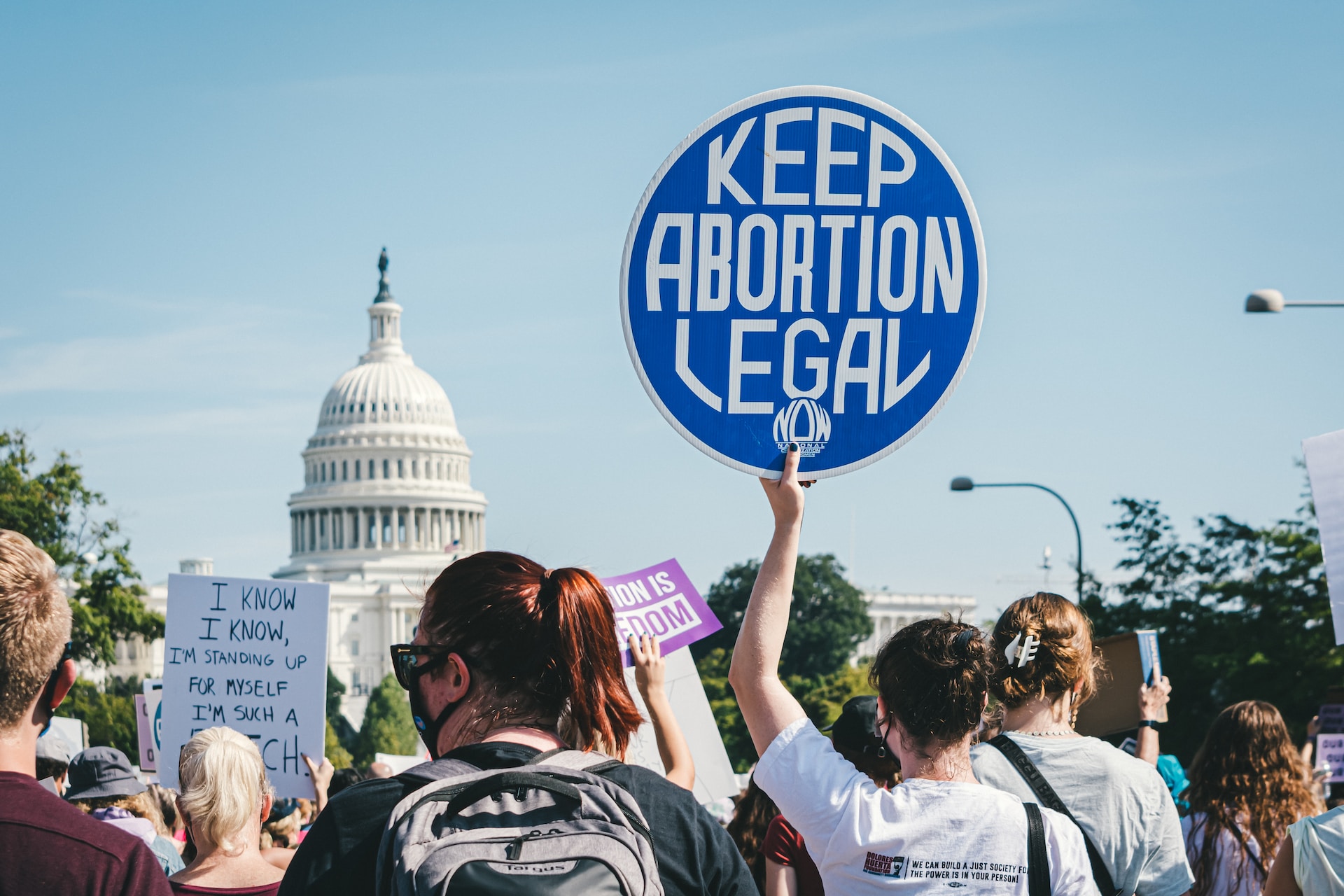
I believe that abortion should be legal in pre-viability pregnancies for any reason and illegal past the age of viability (with exceptions for medical reasons). Let me explain why.
This doesn’t mean that I believe elective abortion to be good or even morally acceptable. I believe that people who choose to have an abortion will be accountable to God for that decision. However, I cannot support legal consequences for women who have abortions nor for doctors who perform abortions.
I think it could make sense for elective abortions to be illegal in a more ideal world (one where extramarital sex and elective abortion were universally considered immoral, and one where poverty were not so pervasive). However, laws against abortion have too many negative consequences (both intended an unintended) and do not make sense now in the United States. These consequences include risking the health and life of mothers who experience miscarriages or who attempt to perform abortions themselves; condemning more women and children to generational poverty; giving the government greater power to violate the privacy of women; opening the door to prosecuting women and their healthcare providers; and eroding the foundational principles of democracy.
Let’s get on the same page
First, let me define a few terms.
The Encyclopedia Britannica defines abortion as
“the expulsion of a fetus from the uterus before it has reached the stage of viability (in human beings, usually about the 20th week of gestation). An abortion may occur spontaneously, in which case it is also called a miscarriage, or it may be brought on purposefully, in which case it is often called an induced abortion…. Induced abortions often occur through intentional medical intervention and are performed (1) to preserve the woman’s life or health, (2) to prevent the completion of a pregnancy resulting from rape or incest, (3) to prevent the birth of a child with serious medical problems, or (4) because the woman does not believe she is in a position to rear a child properly.” 1
For my purposes, I will refer to abortions performed for reasons 1-3 as compelling abortions. When referring to abortions performed for other reasons (reason 4, for example), I will use the term elective abortion. I will use the term “abortion” interchangeably with “induced abortion,” whether that abortion is performed by surgical or pharmaceutical means. When referring to spontaneous abortion, I will use the term miscarriage.
Compelling abortions
I believe it is widely accepted that there are compelling reasons for having an abortion; when a pregnancy is a result of rape or incest, when the life or health of the mother would be at significant risk by continuing a pregnancy, or when the fetus has serious defects that are incompatible with life, an induced abortion may be justified. That does not mean I think that it should be an automatic decision - there may be good reasons to continue a pregnancy in some of these cases, and a woman should be free to choose that path if she desires. But if she decides to have an abortion, she should be allowed to do so.
I know that there are some people who disagree with this. Indeed, some of the anti-abortion laws that have recently passed in various states do not have exceptions for these compelling cases. Such laws are very harmful and problematic. However, I am going to focus on abortions performed for other reasons - elective abortions, as I am calling them.
Consequences to mothers who suffer miscarriages
When states restrict abortion access, they make it harder for a woman who is experiencing a miscarriage to receive proper care. There are two primary ways of treating a silent or incomplete miscarriage: medication and surgery. The problem is, those medications and those surgical procedures are the exact same medications and procedures that are used to provide abortions.
When states begin to prosecute healthcare providers for giving abortion care, those providers understandably become hesitant to promptly and properly treat miscarriages. They may refuse to perform a surgery or prescribe medication even if it is the best option. Infection and hemorrhage are real threats to a woman who is experiencing a miscarriage. If states succeed in intimidating doctors out of performing abortion surgeries, it is inevitable that more women will face these deadly complications.
When providers have to consider both medical and legal consequences of treating a patient, the result is a chilling effect on patient care. This isn’t merely conjecture; consider the case of this woman in Texas whose care for her second miscarriage (post-abortion ban) was much worse than the care for her first (pre-abortion ban). She and her husband now have stopped trying to have kids until they move out of the state.
No doctor should ever fear giving thorough and timely care because a short-sighted state legislature decided that it would look good for them to take a “stronger stance” against abortion. When providing care, a doctor should only have to worry about what is best for their patient; they should never have to worry that doing the right thing could make them a criminal.
Many of the state laws restricting abortion are not nuanced or specific enough to allow for miscarriage care. Even if they were, the risk to human life and health would still be too great to justify their existence.
Poverty: The Bigger Problem
Abortion is often an economic decision
Consider these important facts:
- “Some 75% of abortion patients in 2014 were poor (having an income below the federal poverty level of $15,730 for a family of two in 2014) or low-income (having an income of 100–199% of the federal poverty level).” 2
- “In 2014, 51% of abortion patients were using a contraceptive method in the month they became pregnant, most commonly condoms (24%) or a short-acting hormonal method (13%).” 3
- “In 2014, it continued to be the case that the majority of abortion patients (59%) had had at least one previous birth, including one-third who had had two or more; 41% of abortion patients had had no prior births.” 2
I conjecture that abortion in many of these cases isn’t really a matter of convenience or moral failing. It’s about economics. Giving birth and raising a child is expensive. It is completely understandable that a woman who is already deep in poverty would feel that a child would stretch her finances to the breaking point, especially when she already has one or more other children. Having another child that she cannot afford will just make the generations-long struggle against poverty worse. Her children will be less likely to get a good education, more likely to end up in jail, and more likely to have to depend on government assistance for food, housing, and medical care 4.
Withholding condemnation
You may say to a woman seeking an abortion for social or economic reasons: “Well, you should have thought about that before having sex, and now you have to deal with the consequences.” First of all, I’m going to guess that very few women are ignorant of the potential consequences of sex. However, it’s not always a simple decision. Let’s say she is married to a man who has an ok job, but he is abusive or neglectful and she wishes she could leave him. Perhaps she already has had one child with him, and is afraid that offending, reporting, or divorcing him will put her and her child out on the street. And so she consents to sex with her husband, even though she knows that another child would make her situation even more precarious. Perhaps she is even using birth control, just praying that it will work. But then it doesn’t.
As someone who has a compelling religious argument against abortion, an extensive support system, a great education and solid economic stability, it’s easy for me to postulate that in her situation I would still have the baby. But for this hypothetical woman who has none of those things, I can understand how she feels; I can understand that she feels that having an abortion is the best option for her and for her current (and even future) children. She may feel like she has no choice. I may disagree, but I can understand.
What I cannot do is condemn her for her choice. And I argue that the Government cannot condemn her either. The Government and I do not know all of the circumstances of her life. We don’t know her background, her beliefs, her morals, her heart. We don’t need to know, have a right to know, nor have a way to know these things. She knows, and God knows. Let her use her agency, follow her moral framework, and decide for herself what is best for her and her family. Rather than saddling her with civil or criminal penalties based on our incomplete knowledge, let God judge her actions and her heart.
Christians should fight Poverty, not the Poor
Instead of spending time, money, and resources preventing women from accessing abortions, we should focus on lifting them out of poverty. I believe that is the more compassionate and Christlike thing to do. As their economic situation improves they will be more willing and able to give birth to and raise children. They will have less need for abortions.
In addition, once a person’s physical needs are met, they will be more open to the Gospel of Jesus Christ. Then through Him, they will come to believe his commandments for themselves; he will change their hearts and desires. He can be the one to tell them: “Go, and sin no more.”
I believe that the penalty for those who profess to follow Christ but refuse or are reluctant to help the poor will be much more severe than the penalty for someone who gets an abortion but doesn’t know or believe it is morally wrong.
Ineffective abortion bans
It is naïve to think that restricting abortion access in one state will significantly decrease the number of women seeking abortions. For those in the middle and upper class, it will be little more than an inconvenience to go to another state for an abortion. Women in the lower class will be stuck between deciding whether to 1) stress their finances by traveling to another state for an abortion or 2) stress their finances by having a baby. I would guess the majority will choose the first. Therefore, state-wide restrictions will really just make the poor poorer, inconvenience the rich, and do little to actually stop abortions from happening.
Even if abortion were made illegal nationwide (not likely, but a possibility), the richest will just go to another country. Those who can’t afford to leave the country will most likely try to abort a pregnancy themselves. In most cases, this will probably look like acquiring medications on the fringes of legality, as has been done for years in Mexico 5. This is generally pretty safe, but for the small percentage of women who experience complications (such as a hemorrhage), taking these without medical supervision could be deadly.
However, medication abortions are only possible up to about 12 weeks gestational age. Those who don’t realize they’re pregnant until after that or those who can’t get the medications may resort to more dangerous means of self-aborting 6. If a woman who has a complication with self-abortion then seeks medical help, providers may hesitate to provide needed care, afraid that they may be prosecuted. I believe that most women who decide that they need an abortion will accept these risks rather than resigning themselves to a pregnancy and birth that they don’t want. In the end we simply end up with lots of risky self-abortions rather than fewer abortions overall.
A note on adoption
A common argument is that adoption, not abortion, is the answer to unwanted pregnancies. While I do agree that more people should choose adoption if feasible, it does not change the fact that “carrying an unwanted pregnancy to term irrevocably alters the course of a person’s life. Banning abortion will take some of the power to determine that course away from pregnant people and give it to the state, and the availability of adoption does nothing to change that.” 7
Consequences For Democracy
In addition to medical, financial, and legal consequences for women, abortion bans also have deep ramifications for democracy. A significant majority of people in this country say that elective abortion should be legal in all or most cases 8. Banning elective abortions will not change their minds about the morality of abortion. This is in part because it has been legal for so long in the U.S. and much of the developed world. Additionally, national and international organizations including the World Health Organization9 and the American College of Obstetrics and Gynecology10 consider it both an important part of medical care for women worldwide and a basic human right.
Even if a large minority of people were to believe that elective abortion is immoral, they should not be able to exercise their will over the majority. If such a minority attempts to enforce a ban on something which the majority deems not only morally acceptable, but a necessary right, there will never cease to be conflict over it. The majority will become increasingly resentful and distrustful of the minority, in part because of the minority’s political power. They will attack and mock the moral principles of the minority and become hardened to them, even if those principles are true.
Meanwhile the powerful minority will become more and more distanced from the majority. They will become increasingly entrenched in their position on this One Issue that they view as sacrosanct. They will begin to oppose all positions of the majority, even on those issues on which they could and should agree, or at least compromise. Within their own political and social groups, anyone who suggests that a compromise on the One Issue could be made will be ostracized and silenced.
All of this means that great time, effort, and attention will be given to this One Issue - neither side willing to budge, while anger and resentment build and fester. Meanwhile, the other pressing issues facing the country will be neglected or otherwise stalled.
Do I believe that elective abortion is morally wrong? Yes, I do. Do I believe that an ever-shrinking minority of people who agree with me should try to enforce that moral position? No, I do not.
When we disagree on what’s right and wrong
Conservatives often view abortion as murder, and as such advocate that it should be illegal despite what the majority believes. They may ask: “if the majority decided that capital murder was not immoral and sought to legalize it, would you still say that the majority should rule?” However, I don’t believe that the majority (or any significant number) of people in this country will ever believe that capital murder is morally acceptable. Nor does legal abortion create the same societal problems as legal murder would - civilization could not exist under such a system. Therefore, it’s not a useful comparison.
Abortion is not the same thing as murder. Even though my religion and morality place abortion and murder on nearly the same level of severity, I cannot ignore the fact that the majority of people do view abortion as a completely different issue from murder. If I choose to ignore their view and pretend that mine is the only one that matters (even if I do believe I am right), then I am making a mistake.
The problem is that we live in a society in which people often don’t agree on what is right and wrong. We don’t agree on what We the People (that is, the government) should do about a host of issues.
It would be wonderful to live in Zion, where the people were of one heart and one mind and had no poor among them11. But we don’t live in Zion, we live in the United States of America. So until the Millennium of peace when Jesus Christ will reign, we have to live on other principles.
One such principle that We the People of the United States have agreed upon is this: When we are divided on questions of morality or policy or government, the position of the majority of the people should prevail. Granted, the Constitution makes a huge mess of this: The majority of the popular representatives of the people (the House), the majority of the representatives of the states (the Senate), the person chosen by the majority of the electoral college members to be the head of state (the President), and the judges chosen by the various presidents and approved by the Senate, all must uphold the same decision for it to become and remain law. But fundamentally, the Democratic part of ‘Constitutional Democratic Republic’ implies that the voice of the majority should become the law of the land. When through the convoluted inefficiency of state and federal governments the voice of the majority fails to be the law of the land, there will be conflict until the imbalance is rectified. See, for example, my thoughts about the prohibition of alcohol in the 1920s.
Government intrusion and inefficacy
If the federal government or any state government creates a law, it also assumes the responsibility to enforce that law. With that responsibility come burdens of time, money, and manpower. Not only that, but the government also gains the power to intrude into the private affairs of its citizens. We do place limits on that power, of course: search and arrest warrants, probable cause, due process, and public oversight are important safeguards for citizens’ freedom.
By making abortion illegal, the government is forced to invade privacy beyond any reasonable bounds. Consider a woman who shares with her neighbors that she is pregnant, only to miscarry weeks later. When one of those neighbors notices the absence of a growing belly, they may suspect she had an abortion and decide to report it. When law enforcement investigates, that mother will not only be forced to recount her terrible loss, but also somehow provide evidence that it was spontaneous and not induced. No woman should EVER have to do that.
Investigating healthcare providers is also problematic. If a doctor is suspected of providing an elective abortion she cannot provide evidence to the contrary because the relevant records are all protected health information that cannot be disclosed.
Trying to draw the line between what is legal and illegal abortion is likewise infeasible. On paper, it sounds all fine and good to say an abortion is OK if the woman’s life is in danger or the baby won’t live. In reality, such a rule simply doesn’t work. How much danger does a woman have to be in? You cannot quantify nor predict such a risk. How terrible will it be for a mother to be forced to wait days or weeks to get an abortion that the physician knows she needs, but can’t legally provide because she’s not actually dying yet 12. How many women will die? And this doesn’t even take into account the fact that pregnancy and childbirth inherently put a woman’s health and life in danger 13.
If a woman is convicted of having an elective abortion, what are the consequences going to be? Remember she is probably poor and she probably has other children. Do we really want to put that woman in prison, put her children in foster care, and ruin any chance she has to ever escape poverty? Or do we really want to fine her, devastating her finances even more? No, we do not.
In the case of prosecuting healthcare providers, do we really want to put doctors in prison when there is a nationwide shortage of physicians? Do we really want to drain their time and resources in legal proceedings and fines? Do we really want to push them out of the state or country because they cannot provide a service that is important and necessary to their patients’ well-being? No, we do not.
In short, the government should not be able to invade people’s privacy as necessary to investigate and prosecute abortion. It is not capable of judging when an abortion may or may not be justified. And prosecuting abortion will hurt both individuals and society at large.
Let God be the judge
Banning abortion is the wrong thing to do. It will only hurt women and their families, create fear and uncertainty for healthcare providers, and erode the trust and respect critical to democracy. It won’t actually prevent abortions from happening nor will it help solve the underlying problem of poverty.
So when you consider for whom to vote, please do not dismiss a candidate or party simply because they stand against criminalizing abortion. Remember to think about all of the consequences of a policy before you decide to stand for or against it.
As a Christian, I believe that God knows the thoughts and intents of every heart. He knows all the circumstances of our lives and the complete content of our character. He is much more just and merciful than the government could ever be. Therefore, let Him be the judge, especially because most of the consequences of abortion are spiritual and emotional. Abortion can be repented of. Let Him be the healer of those wounds. Let each person use their moral agency to choose.
-
Britannica, The Editors of Encyclopaedia. “abortion”. Encyclopedia Britannica, 24 Aug. 2022, https://www.britannica.com/science/abortion-pregnancy. Accessed 17 September 2022. Numbering added. ↩
-
Jerman, Jenna, Rachel K. Jones, and Tsuyoshi Onda. “Characteristics of U.S. Abortion Patients in 2014 and Changes since 2008.” Guttmacher Institute, August 24, 2022. https://www.guttmacher.org/report/characteristics-us-abortion-patients-2014. ↩ ↩2
-
Jones, Rachel K. “Reported Contraceptive Use in the Month of Becoming Pregnant among U.S. Abortion Patients in 2000 and 2014.” Contraception 97, no. 4 (2018): 309–12. https://doi.org/10.1016/j.contraception.2017.12.018. ↩
-
“Effects of Poverty, Hunger and Homelessness on Children and Youth.” American Psychological Association, July 12, 2022. https://www.apa.org/pi/families/poverty. ↩
-
Associated Press. “Mexican Abortion Advocates Look to Help Women in U.S.” NBCNews.com. NBCUniversal News Group, January 19, 2022. https://www.nbcnews.com/news/latino/mexican-abortion-advocates-look-help-women-us-rcna12792. ↩
-
Harris, Lisa H., and Daniel Grossman. “Complications of Unsafe and Self-Managed Abortion.” New England Journal of Medicine 382, no. 11 (2020): 1029–40. https://doi.org/10.1056/nejmra1908412. ↩
-
North, Anna. “Why Adoption Isn’t a Replacement for Abortion Rights.” Vox, December 8, 2021. https://www.vox.com/2021/12/8/22822854/abortion-roe-wade-adoption-supreme-court-barrett. ↩
-
“America’s Abortion Quandary.” Pew Research Center, Washington, D.C. (2022-05-06) https://www.pewresearch.org/religion/2022/05/06/americas-abortion-quandary/ ↩
-
“Abortion.” World Health Organization, November 25, 2021. https://www.who.int/news-room/fact-sheets/detail/abortion. ↩
-
“Abortion Policy.” ACOG. The American College of Obstetricians and Gynecologists, May 2022. https://www.acog.org/clinical-information/policy-and-position-statements/statements-of-policy/2022/abortion-policy. ↩
-
OB-GYNs Confront Legal Impact of Abortion Bans. The New York Times, 2022. https://www.youtube.com/watch?v=ccVH_1g-kCY. ↩
-
Raymond, Elizabeth G., and David A. Grimes. “The Comparative Safety of Legal Induced Abortion and Childbirth in the United States.” Obstetrics & Gynecology 119, no. 2, Part 1 (February 2012): 215–19. https://doi.org/10.1097/aog.0b013e31823fe923. ↩